Make Your Own Fruit Bars
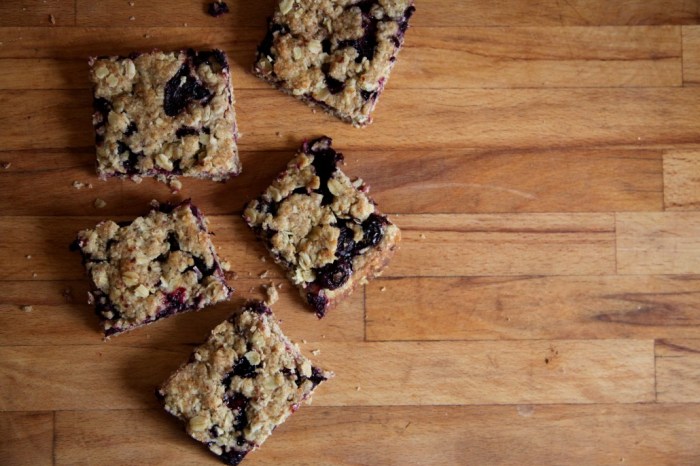
I am excited to have my latest recipe up over on Adventure Journal!
It’s a recipe for Blueberry Rye Bars, perfect as a packable snack, and a recipe that takes full advantage of summer berries. In fact, you can switch out the berries in this for whatever you have on hand. I’ve even made them with dried figs.
Most fruit bar recipes are heavy on brown sugar and butter, but this one uses honey and olive oil instead. You can catch the full recipe here.
The Culinary Cyclist on the Outspoken Cyclist Podcast
I was happy to chat with Diane Lees of The Outspoken Cyclist recently about The Culinary Cyclist. The show is deemed “radio for cyclists by cyclists.” And here I bet you didn’t even know that cyclist radio was a thing? Well now you do.
Check out The Outspoken Cyclist podcast and catch my episode here. Don’t worry, you won’t just be bored by my ramblings on healthy eating; I’m also on there with frame builder, bike designer and author Lennard Zinn, which is pretty cool.
Video: Coffee Outside
Surrounded by a lot of talented filmmaker friends, I have always been attracted to the power of visual storytelling. But enjoying visual storytelling is one thing. Making it yourself is another thing entirely.
A little over a year ago I told a couple of filmmaker friends that I wanted to invest in a camera so that I could try my hand at filming. “Do it!” was the resounding response.
Sure, I had played around with iMovie a few years ago, putting together a few clips into something coherent, but nothing more than that. Maybe it was time I challenged myself. So I got the camera, and took a lot of nice photos with it, entirely intimidated, in fact, nearly paralyzed, by the thought of trying to do video. Where would I even begin? What if I failed?
Having talented creative people around you is a really good thing. Imagine if you were surrounded by a bunch of boring, mediocre individuals? No thank you. But there’s a flip side to being surrounded by all this talent; while they’re happy to encourage you, you also have very high standards to live up to. And so, I found myself unable to jump into the world whose waters I wanted to test. I was nervous, stricken by the idea that I might make something that wasn’t up to par.
And then it struck me: this is your first film. If we all listened to the voices in our head that told us we were going to fail before we even started, we wouldn’t get anywhere. Failure is just another form of fear. Because what is failure? The definition is up to us entirely, and in the case of wanting to try something new, the only failure I could really come up with, was not doing it at all.
So I set out to make a short film. Super short. Turns out, it’s hard. But it’s also fun, and I can see why all my filmmaker friends are so addicted. There is power in storytelling, whether it’s a short love letter to something we love, or if it’s a feature-length documentary tackling important subjects that we believe the world should know more about.
This video came out of a love of coffee and the outdoors. At the end of July, I spent two weeks hiking in Northern Sweden, and I knew that with a place so visually stunning, I should at least get something on film. This is what it became. This short video isn’t going to change the world (that will be a film later down the line, thank you very much) but maybe it will change how you think about your coffee routine. And maybe this story will inspire you to try something new, something you have never done before and that you’re scared of. Because quite frankly, there’s nothing better.
Recipe: No-Bake Blueberry Cake
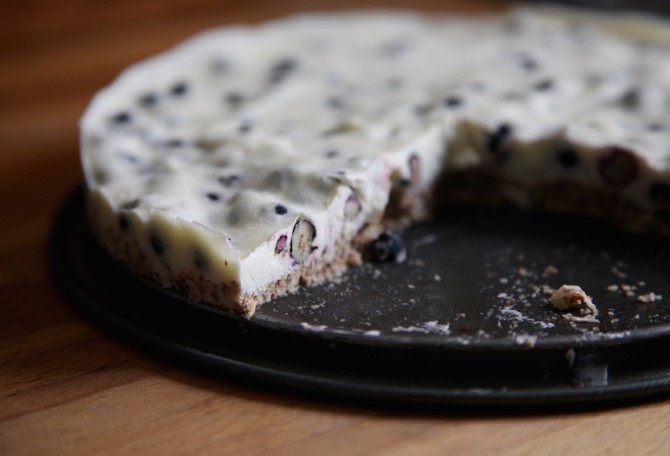
Did you know that if you mix honey and yogurt you can make a super simple frozen cake? Like ice cream cake, except way better for you.
I made this last summer and recently threw it together with a batch of blueberries that I had on hand. It’s the perfect cold summer treat. The crust is flourless too; made with almonds and hazelnuts, and a dash of whiskey for those who dare.
What if Nature Was a Prescription Drug?
Is nature the answer to all your problems? It might be.
I love this humorous video by Dream Tree Film & Productions. It’s part of a series, all intended to get us thinking about the positive benefits of the outdoors. What if we all got more regular doses of nature? Imagine how well off we would be…
Learn more at NatureRX.
Preorder the Second Edition of The Culinary Cyclist
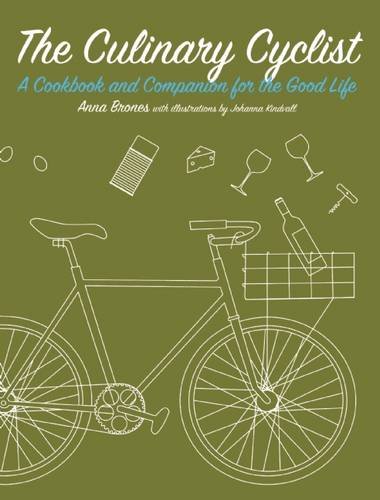
Two years ago, my first book, The Culinary Cyclist, was released. When I first started writing it, I wasn’t really sure if anyone would be interested in the topic of bikes and food. Turns out they were. So much so that the book is coming out in a brand spanking new edition, with all the recipes updated in both volume and weight measurements (that means it’s user-friendly for anyone measuring in cups, ounces or grams), and a few tweaks here and there, as well as a new cover.
It’s my first book, so maybe it will always be my favorite. Even now I keep a copy in the kitchen and reference it regularly. Sometimes I’ll flip through and read a few passages. They still make me happy. And they make me want to get out on my bicycle.
“The rules for living well, if you can call them that, are simple and a pleasure to follow. Eat local and mostly plants. Ride your bike, even on rainy days. Say yes to dinner invitations. Always bring your signature dessert. Invite people on picnics. Bike in the sunshine. Follow a morning ride with a strong French press.” -The Culinary Cyclist
The new edition will be released on September 15, 2015, and you can preorder your copy here. All the recipes are gluten-free and vegetarian, and there’s a whole lot of vegan stuff in there too. In other words: lots of healthy, real food.
Of course, if you want the original, they’re currently 40% off over on Microcosm Publishing, the lovely independent publishing company that is behind the book (while you’re on the site, check out their other titles too). A fantastic deal for the original print of a cookbook, wouldn’t you say?
Why Shouldn’t You Microwave Your Coffee?

Microwaves and coffee, that’s this week’s topic over on my coffee column at The Kitchn. Short conclusion: it’s better to make a fresh cup!
Want to know why you shouldn’t be microwaving your coffee? Read the full article here.
Image: Louis
What if Objects Were Designed to Last Instead of to Be Replaced?
Planned obsolescence is something that I find infuriating. The idea that we design things to fall apart is absurd, especially when we consider the world of mass consumption, and mass waste, that we live in. These days it’s so easy to toss something broken and buy something new to replace it. But even worse; often if something is broken, you might not even be able to get it fixed at all.
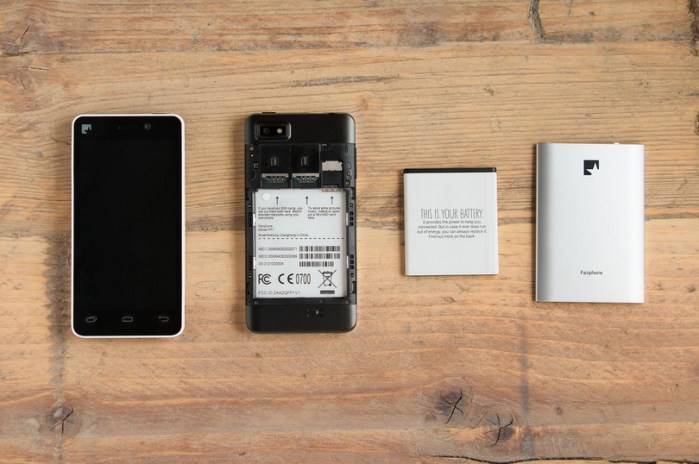
I take a look at this topic in my latest piece for Brooklyn Fashion and Design Accelerator, featuring a new smartphone – the Fairphone – that is designed in the complete opposite way of most of our technological devices: it’s designed to have a long life.
Our modern culture has become synonymous with throwaway culture; when something doesn’t work, things are cheap enough that it’s often less expensive for us to toss whatever doesn’t work and buy a new one. Of course, the real costs of getting rid of something and buying something new to replace it are externalized. The price it costs us to replace an object is often far under the real environmental and social cost of producing a new one.
Consider this: in 2010, Americans threw away around 310 million computers, monitors, TVs, and mobile phones. That makes for hundreds of thousands of phones thrown away on a daily basis. When it came to smartphones, only about 11% of those that were disposed of were recycled, leading to a significant amount of e-waste. Certainly there is a part of that number comes from a desire to just have something new, but another part of it comes from being forced to throw something away because it’s just not possible to fix.
In its second iteration, the Fairphone is said to be “designed to change the way products are made.” This isn’t just a new phone design; this is a design challenge to other industries, asking them to step it up and think smarter about design. Besides just design, Fairphone is rethinking the entire economic model that most businesses base their practices.
Read the full piece here.
Image: Fairphone
Are Women the Solution to a More Sustainable Food System?
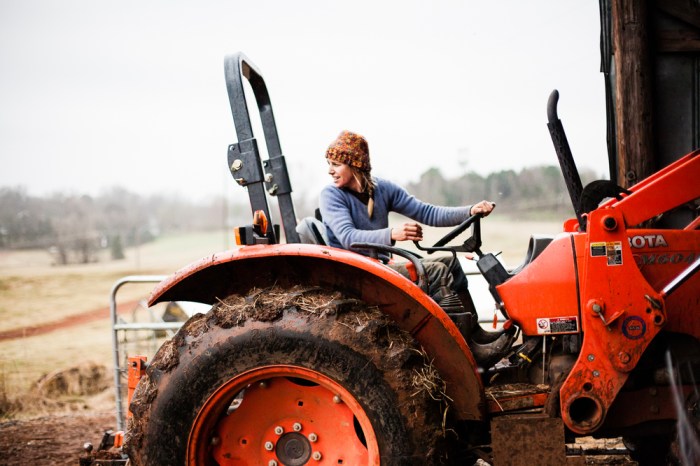
I have been very inspired by the work of Audra Mulkern and her Female Farmer Project. She recently inspired me to write an article about women and farming over on Foodie Underground, titled “Gender Equality and Sustainable Food: The Power of Women Farmers.”
Here’s a little excerpt:
In the U.S., while between 1982 and 2007, the USDA’s Economic Research Service found that the number of women-operated farms had more than doubled, there’s still a gender gap. According to the U.S. Census of Agriculture, 86 percent of the 2.1 million people responsible for day-to-day operations of farms are men. But there are more women coming to the farming world, and in a time when the total number of farms is declining, the number of women-owned farms and women farmers is on the rise. Today women make up about 30 percent of all U.S. farmers – and often, they take a more sustainable approach. Which means that when we think about a more sustainable world of food, not just at home, but globally, we have to be thinking about women.
And if we are going to think about women, then we have to start seeing them too. Audra Mulkern of the Female Farmer Project knows all about that. A talented, self-taught photographer, a couple of years ago, Mulkern decided to launch a projected devoted to documenting the world of women farmers. Inspired by the women farmers in her local Snoqualmie Valley, Mulkern has set out to tell the stories of female farmers. “I noticed over a couple of seasons of visiting farmers markets and farms that there was a marked increase in female interns. I started asking around and decided it was a story I needed to tell,” says Mulkern. Since launching the project, she has photographed women farmers in five different countries, becoming a big advocate for sustainable agriculture and food justice along the way.
You can read the full article here. And I encourage you to give Audra and the Female Farmer Project a follow!
Image: Audra Mulkern
Delightful French and Scandinavian Fare at Måurice Luncheonette in Portland
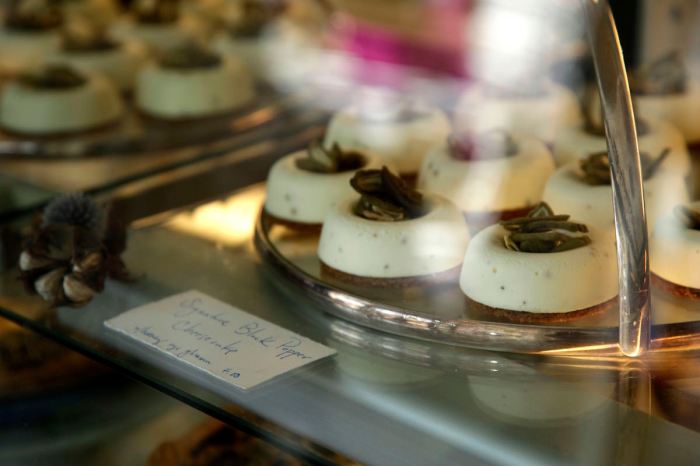
When I was recently in Portland I finally got the chance to eat at Måurice, and I was utterly charmed. So much so that I wrote about it over on Foodie Underground.
It’s a sweet space with French and Scandinavian influences, in both the decor and the food. I think I liked it so much because it felt so authentic; nothing was forced, it was all done simply out of love. And of course, everyone wears stripes and they serve fika, what’s not to love?
 blog.annabrones.com