Archive for the ‘Portfolio’ Category
Preorder My New Book – ‘Fika: The Art of the Swedish Coffee Break’
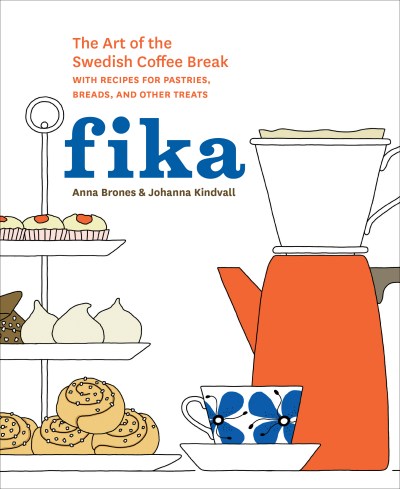
It’s here!
Ok, so it’s almost here. And when I say “it” I mean the book that Johanna Kindvall and I have been working hard on over the last couple of years. As I have learned, book writing and publishing is a long process, and I am so excited to almost be at the most exciting part: the moment where the actual book sits in my hands.
But for now, at least the book is alive on the Internet, and it’s available for pre-order, which means you can snag a copy and diligently wait for it to come to your mailbox in spring.
Love Swedish baked goods? Ever wonder how to make a real Swedish cinnamon roll? Want to try to be more Scandinavian? Then this book is for you.
Packed with traditional recipes for cookies, cakes and breads, this book is all about celebrating the Swedish tradition of fika, otherwise known as the quintessential Swedish coffee break.
Drooling already? You can preorder from my favorite bookstore of all time, Powell’s, as well as Amazon, B&N, IndieBound, Google Books, and iBooks.
Now, let’s all begin the countdown to the April 7, 2015 on sale date!
Paris: Where to Drink Good Coffee in the Marais
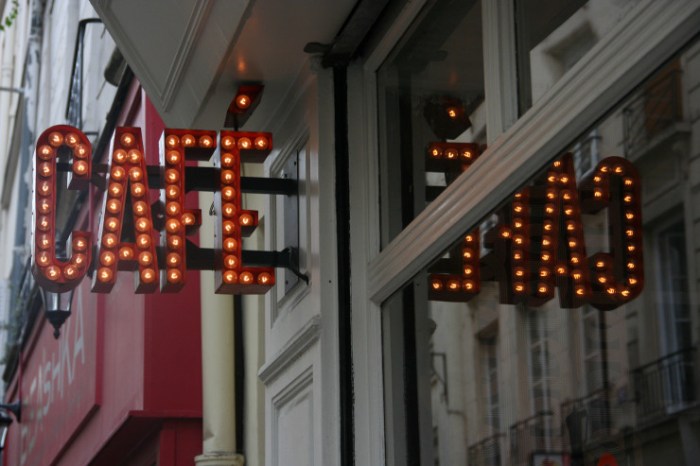
I’ve got a round up of favorite coffee shops in the Marais over on Sprudge, including some of my all-time favorites like Fondation and Loustic.
For a taste of the neighborhood, enjoy these photos. And click over to check out the guide, and maybe even lose some time checking out Sprudge, because what’s better than an entire website devoted to coffee?
What Do Food and Fashion Have in Common?
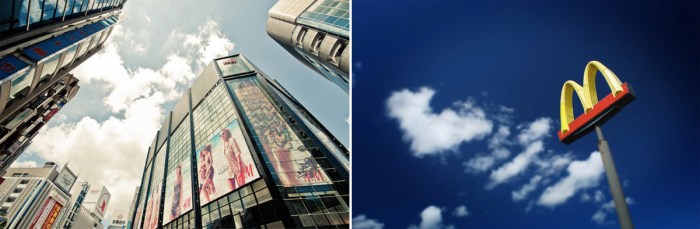
What do food and fashion have in common?
I have been thinking a lot about this question lately, and why we are becoming hyper aware about what we eat, and yet remain so unaware about what clothes we don.
How many times have you been asked “where do your [insert produce item here] come from?” with the expectation that you will have a response that involves a local farm or farmers market? More than a few I’m sure. But how many times has someone asked you “where is that pair of jeans from?” and implied that they want to know what country they were made in as opposed to what store you bought them in? Rarely, if ever.
Can Digging in the Dirt Make You Happy?
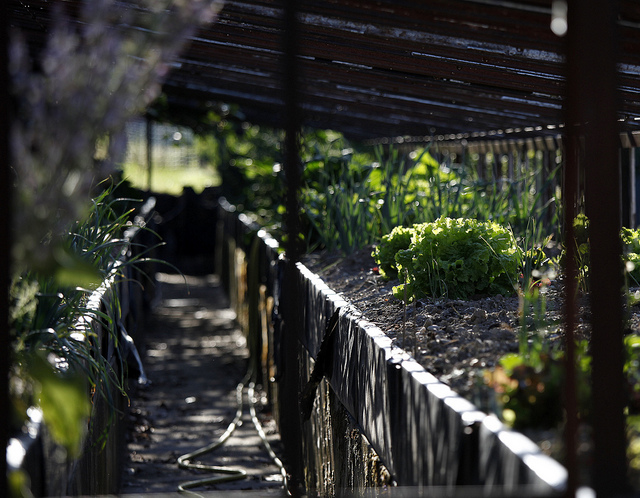
I was thrilled to work on a story for Modern Farmer about the link between dirt and well-being. There’s some very interesting research looking at the benefits of microbes in the environment on human health. Here’s an excerpt:
The psychological benefit of nature has been well documented. When it comes to being happy or not, many studies show that psychiatric problems are more common in urban than in rural communities. That makes Lowry’s and Rook’s research interesting, as it gives us a better understanding of exactly why being outside, in a garden or on a farm, makes us feel good.
“People usually assume that the health benefits of exposure to green space are due to exercise. In fact two large studies now demonstrate that although exercise is definitely good for you, it does not explain the beneficial effect of green space,” says Rook. “Contact with microbial biodiversity is looking like the most probable explanation for the green space effect.”
Just like we’re becoming more and more aware of the benefits of foods with microbes (think: fermented foods with probiotics), being around a lot of different microbes from the earth and animals is good for us too. In other words, sterile environments that are too clean aren’t so great for you.
I was even more excited to see that the piece got picked up and discussed by the New York Times.
Now, on to finding a plot of land to get my hands dirty.
Image: jenny downing
5 Favorite Coffee Spots in Amsterdam
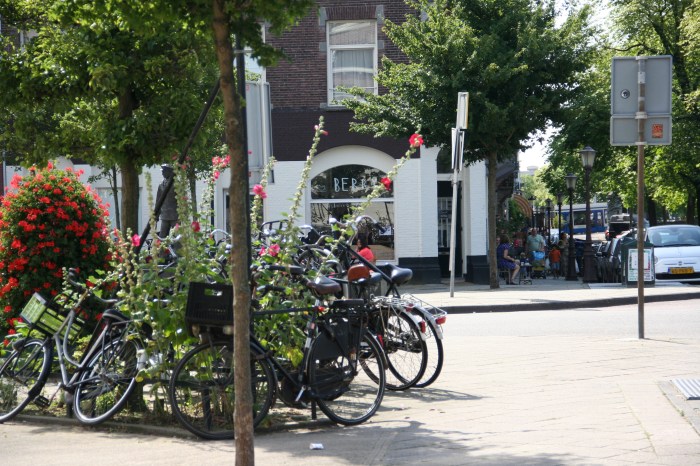
Amsterdam is one of my favorite cities, and not just for the bikes. There’s something about being surrounded by water that just makes me feel at home. You ride along the canals, your bicycle bumping over the occasional cobblestones and you can literally feel the pace of life slowing down.
On a recent weekend trip I made it a mission to track down good coffee (as usual). In fact I was so committed to my mission that half an hour after getting off the train I as sitting at local coffee roaster Headfirst drinking a filter coffee. If you’re committed, you’re committed.
Kombucha Smoothies? Yes, Please
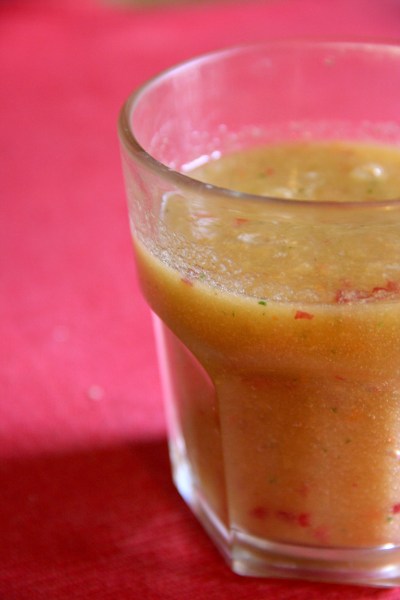
I have been brewing kombucha at home for many years now. Which in turn has made me a bit of a kombucha freak. But this is hat happens when you start fermenting at home. The process is fun and it’s kind of amazing to be able to make your own bubbly, fermented drink with nothing more than tea, sugar and a kombucha mother.
All About Bicycling in Paris

“What’s it like to ride in Paris?”
This is a question that gets asked regularly, both by those interested in cycling and also by those that just think it’s nuts to ride a bike in a big city.
It’s actually a hard question to answer, because there’s no easy answer. It’s difficult. It’s wonderful. It’s often a hot mess. It’s rewarding. It’s big city biking after all.
But there’s nothing better than exploring a city on two wheels, and if you’re up for the challenge of riding in Paris, you won’t regret it. Plus, the more people riding, the better. That’s how we make change.
This week I’ve got a guide to cycling in the City of Light over on HiP Paris.
Despite all the romantic pictures you’ve seen of ladies in flowing skirts with flowers and baguettes in their quaint bike baskets, cycling in Paris isn’t always beautiful. It’s often fast, dirty and sometimes a bit harrowing. But it’s also rewarding. Because when the sunlight hits the buildings just right and you get into the flow of navigating a tight Parisian street on two wheels, life feels really good.
Paris is a city of winding streets and grand boulevards; cars, buses, and pedestrians that don’t pay attention; and recklessly antsy scooter riders, ready to dodge a vehicle whenever the opportunity presents itself. Stop paying attention for a few minutes and you can get yourself into a lot of trouble.
This is not to deter you from cycling. On the contrary, I want you to embrace cycling in Paris – the more cyclists the better – but it’s good to know what you’re getting yourself into. An added benefit of mastering vélo riding in Paris is that because it’s not always an easy city to ride in, you’ll feel especially accomplished once you learn to make your way through the network of streets and bike lanes. You will definitely deserve that glass of Sancerre when you saddle up to the wine bar later in the evening.
Read the full article here.
Is Paris Any Good or Not?
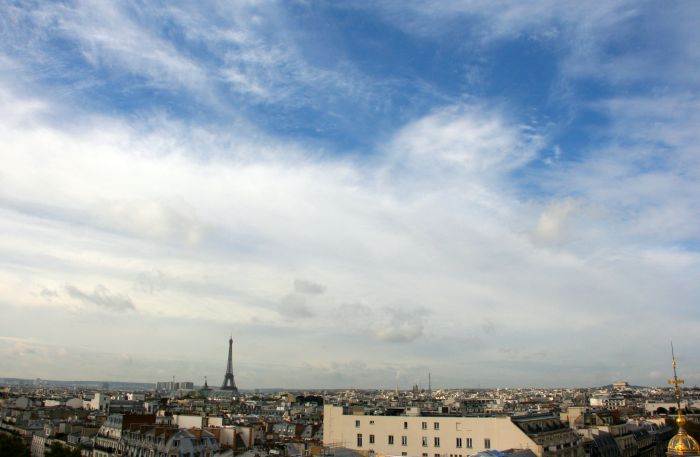
I’ve got thoughts about Paris and our notion of “home” in a new essay over on Medium. I have been meaning to write this essay for quite some time, and happy that it found a place in The Archipelago collection.
In the beginning, you feel high just from being in Paris. At dusk, the light hits the buildings just so. You find a bakery that makes the best almond croissants in the world. Nothing can get you down. But then eventually the downs do come, and they hit you hard, like a bucket of cold water in the face. Your bank meeting that was supposed to take ten minutes takes two hours. A taxi almost hits you while you’re riding your bike in the bike lane and you’re the one who gets yelled at. It rains. It gets gray. You try to go for a run and get hit on — “courage mademoiselle.” You spend far too much time arguing in French to get something accomplished that you didn’t even want in the first place. A certain dreariness sets in that you can’t seem to shake.
Like Bogart in Casablanca, I try to tell myself “I’ll always have Paris” — not the real city, with its homicidal cars and persistent men, but the memory, the good stuff. Eventually the daily frustrations will fade, and in ten years it will be easy to gloss over the frustration and be one of those people that casually throws “that time I lived in Paris” into conversation. It wasn’t just a ten-day trip, or a month abroad, I’ll tell people. No, I actually went and lived there. Wrote there. Ran there. Drove there. Called it home for a while. Even in the darkest moments, there’s something comforting about that thought. I’ll always have Paris.
In the meantime, because of my adopted city’s magical reputation, I don’t get to complain. “The apartment is tiny, I’m starting to feel claustrophobic.” “Yeah, but Anna, you’re in PARIS.” As if, once enough poems are written about a city, it becomes impossible to be sad there.
It felt good to write this piece. The editor challenged me to call it “Is Paris Any Good or Not?” but if anything it’s less about Paris and more about thinking what “home” means, and maybe even, where “home” is.
You can read the full essay here.
Are We Addicted to Fashion?
Normally I write about food, bikes, or coffee. Or some combination of the three. But if there’s one thing that ties my writing together, it’s that I believe that we have to think differently about how we live. I want to get people to think about their daily behaviors, and hopefully, start challenging cultural norms and expectations.
One thing that clearly falls into that category is fashion, and while I am not a fashion writer, I am intrigued by the clear link between consumption and what we wear. There’s no denying that as a culture, we’re obsessed with shopping. But why? I got to explore that question in a piece titled “Breaking the Addictive Culture of Fashion Consumption” which was published this week.
Consider this: in 1930, the average American woman owned an average of nine outfits. That wasn’t a minimalist wardrobe; it was simply a wardrobe. Nowadays however, we’re far from that. The average American woman owns 19 pairs of shoes alone, and as Americans, we spend about $1,700 on apparel every year. We’re taking up space with things we never wear, and we’re paying to do it.
So why do we consume? That’s the ongoing question of psychologists and marketing professionals. It comes down to one thing: emotion.
“Necessities to sustain life and have basic comforts are physiologically driven. With very few exceptions, our society exists above this level. For most of us, it is the interaction of emotion with psychological motivation that is responsible for our behavior as consumers. These emotions range from simple pursuit of pleasure to more complex emotions like security, contentment, and (life) satisfaction,” says Peter Noel Murray, Ph.D, principal of a consumer psychology practice in New York City.
Are we addicted to fashion? I’d say yes. But there’s something we can do about it. Focus on experiences instead. Analyze why we’re consuming. Think about what really makes us happy. Because ultimately, the most valuable possessions that we have, aren’t possessions at all.
You can read the full article here.
Making a Kale Smoothie on the Pedal Powered Talk Show

Last summer my friend Boaz invited me to come and be on his talk show.
But this wasn’t just any talk show. No, Boaz created the Pedal Powered Talk Show, essentially, a talk show on wheels. Boaz takes around his cargo bike, sets up shop in all kinds of places, and interviews all kinds of interesting types. So I was honored when he asked me to be a part.
The night in question, the Pedal Powered Talk Show was a part of a live event put on with NW Documentary. I was there to talk about my book, The Culinary Cyclist, and Boaz asked if I would be willing to make a smoothie on stage.
Anyone out there ever made a smoothie on stage? No, I didn’t think so. It’s not really what you usually get asked to do. But I said yes.
This of course entailed me bringing my own blender, which I diligently packed up in my backpack before riding over to the event. Backpack filled with kale and a blender. That’s true Culinary Cyclist style.
Fortunately, the Pedal Powered Talk Show team got the entire thing on camera and is now available for your viewing pleasure.
It should also be noted that immediately after filming the intro to this episode, Boaz got into a bike crash. Thankfully, he and his awesome cargo bike survived just fine. Maybe it had something to do with his super-powered green smoothie he just drank.
Image: The Pedal Powered Talk Show
 blog.annabrones.com