Posts Tagged ‘Swedish’
Sliced Rye and Almond Pepparkakor
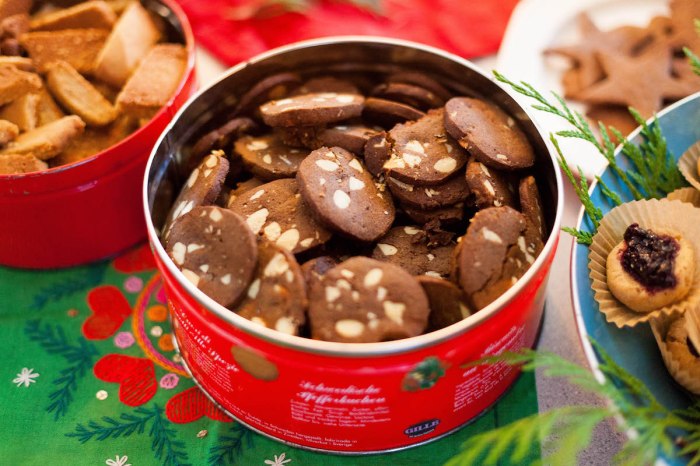
Growing up, we always made a recipe out of the classic Swedish baking book Sju sorters kakor, called Franska pepparkakor, French gingersnaps, for Christmas. Why they were French I am not entirely sure. I have lived in France and never encountered anything similar.
A more apt name is skurna pepparkor, sliced gingersnaps. I like making these because they take much less time than rolling out and cutting traditional pepparkakor but still use the same iconic seasonal spices. This year, I adapted the recipe to be a little less sweet and also be made with 100% rye flour. I like making whole grain cookies, because they are more robust in flavor than baking with traditional all-purpose flour. But you can swap out for all-purpose flour if that’s what you have!
This makes a pretty big batch, so you can also cut it in half if you like.
These cookies are great on their own, but also pair very well with a little blue cheese. And a mug of glögg, of course.
Ingredients:
- 1 cup (5 ounces, 140 grams) almonds, coarsely chopped
- 1 cup (8 ounces, 225 grams) butter, room temperature
- 1/4 cup (1.75 ounces, 50 gram) sugar
- 1/4 cup (60 milliliters) molasses
- 4 teaspoons ground ginger
- 4 teaspoons ground cinnamon
- 4 teaspoons ground nutmeg
- 4 teaspoons cardamom seeds, crushed (or 2-3 teaspoons ground cardamom)
- 2 teaspoons ground cloves
- 1 teaspoon black pepper
- Zest of one orange
- 1 teaspoon baking soda
- 2 1/2 cups (8.75 ounces, 250 grams) rye flour
Preparation:
Chop the almonds and set them aside.
Cream the butter, sugar and molasses, then mix in the spices and orange zest until well blended.
Mix the baking soda with the flour, then add to the wet ingredients along with the almonds. Work the dough together with your hands until you can form it into two cylinders, each about 12 inches long and wrap in parchment paper or a tea towel. Refrigerate for at least 30 minutes. (Note: the dough lasts for a few days in the refrigerator so if you don’t get around to baking them right away it’s totally fine.)
Grease a baking tray and cut dough into slices, about 1/4-inch thick. It’s easier if you use a serrated knife.
Place the slices on the tray and bake at 375ºF (180ºC) for 10 to 12 minutes.The cookies don’t spread out very much, so you can put them pretty close to each other.
Making Glögg
“When I first moved to Washington, you couldn’t buy grain alcohol without a prescription…. so I asked my dentist if he could write me one.”
A couple of years ago, a 90-year-old family friend was sharing this anecdote of her glögg making experience (a leftover prohibition thing). Of Swedish heritage, her recipe was one that had been passed down by her father. It always involved grain alcohol, and she insisted upon making it the same way he did. There was no other option. Which is why this sweet woman was in the dentist chair asking if perhaps she could illegally get her hands on some.
This isn’t a story of alcohol, but a story of tradition.
When we attach to a certain recipe, a song, a book, an activity, what we’re really attaching to is a regularity that ensures nostalgia. Tradition is a fixed point on our life journey, one that we can always turn to. It’s also one that shifts with time, evolving as we do, much like a recipe; the origins stay the same, yet we adapt based upon our personal preferences, modernizing along the way, keeping the idea of tradition but at the same time turning it into something new.
Every family has a holiday pastime of some sort. A friend recently shared with me the story of her favorite Nutcracker experience; the classic ballet wasn’t seen at a theatre, but on a television screen in a community hall in a town where she was passing through. And if we don’t have traditions, we often find ourselves making new ones. What we drink, what we eat, what we listen to – these are all things that are imbibed with memories, and memories to come. Traditions tie us to culture and history. They are what keep us alive.
This is not to say that tradition can’t be broken. Certainly, there are times that call for breaking with the norm and creating something new in the process. But I am convinced that it’s not the actual thing that we make or do that is the important part, it’s simply the act of doing it.
***
One of my holiday traditions is glögg. In my family, we don’t drink glögg (i.e. Swedish mulled wine) until the first of advent, and making it is an important affair.
There are many variations of glögg out there. My father makes his with vodka and Madeira, and of course, the family friend mentioned above still insists on grain alcohol for hers (the last time she brought a bottle of glögg to a gathering it was in fact in an Everclear bottle, “glögg” marked clearly with a Sharpie marker on a piece of masking tape).
I think tradition is important, because it gives us something to look forward to, something to celebrate. In my home, glögg is a reminder of the season. The smell of spices fills the kitchen, giving a sensory cue to commence the holidays.
If you’re interested in making glögg a part of your own holiday traditions, I’ve got two versions for you: an alcoholic one and a non-alcoholic one. As always, there are many renditions out there, and these happen to be the ones that I make in my kitchen. My basic glögg is strong and sweetened only by the addition of dried fruit. If you like yours a little sweeter, consider adding port or Madeira, sugar, honey, or even a little freshly squeezed orange juice.
Everyone deserves the chance to make their own traditions. What are yours?
Glögg
1/4 cup chopped dried figs (or other dried fruit)
1/4 cup raisins
Zest of one orange
2 tablespoons chopped ginger
2 cinnamon sticks
2 teaspoons whole cloves
5 whole green cardamom pods or 2 teaspoons cardamom seeds
1 teaspoon anise seed
1 cup whiskey or aquavit
1 bottle red wine, full-bodied
Optional:
1 cup port or Madeira (this will bring a little additional sweetness to the glögg, add more if you feel like you want it)
2 to 3 tablespoons brown sugar or honey
Garnish:
Blanched almonds
Raisins
Directions:
Place the dried fruit and spices in a glass jar, cover with the alcohol, seal with the lid and let sit overnight (or at least a few hours if you are pressed for time).
Strain the spices and pour the alcohol into a large saucepan along with the red wine and port or Madeira if you are using it.
Heat on medium/low heat until warm, but not simmering. Strain out the spices, then serve warm. **If you want a slightly spicier glögg, then leave the spices in and remove once you have heated it.
This glögg tastes better as it has sat for a bit, so ideally, make it the day before you want to serve it (or longer). Once you have heated it, let it cool, strain out the spices, and place it in a cool, dark place. When ready to serve, heat it up, but don’t let it boil, then pour into small glasses and garnish with blanched almonds and raisins.
If you are entirely short on time (this is the holidays after all!) and in the need for “quick glögg,” add the dried fruit, spices and whiskey to a saucepan and place on medium heat until the alcohol warms up and you can really smell the spices. Add the wine and port or Madeira if you are using it.
You can also add a little brown sugar, honey or freshly squeezed orange juice if it tastes too bold for your liking.
Non-alcoholic Glögg
Note: This one doesn’t use dried fruit in the base since usually the cordial or juice is sweet enough on its own. Up to you if you want to add more sweetness!
2 tablespoons chopped ginger
2 cinnamon sticks
2 teaspoons whole cloves
5 whole green cardamom pods or 2 teaspoons cardamom seeds
1 teaspoon anise seed
Zest and juice of one orange
1/2 cup water
About 3 cups fruit cordial or juice, ideally something tart like lingonberry or black currant, or even a grape juice that isn’t too sweet
Garnish:
Blanched almonds
Raisins
Directions:
Place the spices, orange juice and water into a saucepan. Bring to a boil, then remove from the heat, cover and let sit for at least half an hour. Overnight is good too!
Strain out the spices, then pour the liquid back into the saucepan along with the juice. Heat and serve, or heat and let cool, then bottle until ready to serve. When ready to serve, heat the liquid and pour into small glasses, garnish with blanched almonds and raisins.
This story/recipe originally appeared in my 2017 digital advent calendar: 24 Days of Making, Being and Doing. Want to receive it in your inbox? Subscribe to my newsletter. Want more Swedish recipes? Check out my books Fika: The Art of the Swedish Coffee Break and Live Lagom: Balanced Living the Swedish Way,.
24 Days of Making, Doing and Being: A Digital Advent Calendar
The month of December has a tendency to pass in a flurry, the main focus concentrated on Christmas Day. The other days pass in anticipation, and often, a stress inducing countdown. December has become an extension of our overbooked, over-planned, over-digitized lives; a month where chaos and stress levels collide.
It’s cliché to say that we’ve forgotten the true meaning of Christmas, that today, Christmas is an over-commercialized affair that’s about the procurement of things rather than generosity, caring and celebrating.
Given this frenzy, it’s no surprise that Christmas advertising and marketing works; it sells a cozy, slow image that we’re all craving. Families in pajama sets sitting by the fire smiling at each other (if only you invested in those pajamas, your family would be happy too). A cup of tea on the windowsill overlooking a snowy morning (make sure to buy this particular brand on tea, or your mornings won’t look like this). A couple on a winter walk through the woods (trust us, you can’t go on one of these walks without buying these boots).
Here’s the secret to that kind of living: you can’t buy your way to that feeling, you have to create it yourself.
For me, part of creating that seasonal magic has come in the form of an advent calendar. Growing up, every December meant the enjoyment of an advent calendar. There would always be more than one. Often, a beautifully illustrated one sent from relatives in Sweden, and the other one was an advent calendar that my mother had woven, each day made to hold a small slip of paper. My parents would write a note every night, so that it was the first thing I saw when I woke up the next morning. The note might say something fun that we would do that day (“build a gingerbread house”) or just be a reminder to enjoy the season (“curl up with a book and a cup of tea”). The advent wasn’t a countdown to Christmas, it was a way of making every day during the month of December special.
I have had that advent calendar hanging on the wall every single December since I can remember. Today, it’s a link to the past, an object that carries a lot of magical childhood memories. But it’s also a reminder of the present, the prompt to focus on the now and create a little magic every day during the holiday season.
This is a time of year focused on consumption. It’s a time of year that can be stressful. It’s a time of year that’s frantic. The U.S. version of my book Live Lagom comes out at the end of December, and I have been thinking a lot about how lagom applies to the holidays. Certainly, it means a little indulgence, in the form of a plethora of holiday cookies and glögg, Swedish mulled wine. But it also means balance. It means slowing down, spending time with family, taking winter walks. All the things that we often tell ourselves we will do, but never make the time for.
So this year, I’m putting together a digital advent calendar that’s focused on slowing down, creating and experiencing rather than consuming. The advent calendar will be in newsletter format, sent out every morning. It will include everything from holiday recipes to creative prompts, something new every day. You’re sure to find a little Scandinavian inspiration as well. The goal with this advent calendar is to help you create a little magic every day during the month of December, but also focus on slowing down, finding balance, breathing.
It all kicks off on Friday, December 1, 2017, so if you want to receive the advent calendar, be sure to sign up for my newsletter.
UPDATE: Sign up for the 2022 edition here.
Preorder ‘Live Lagom’ U.S. Edition
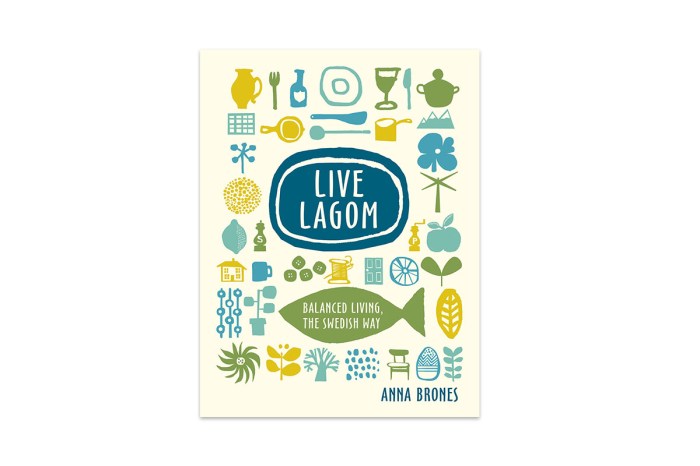
Earlier this year I wrote a book called Live Lagom: Balanced Living the Swedish Way, published by Ebury Press in the U.K. I am happy to announce that it’s hitting the U.S. market this December thanks to the wonderful team at Ten Speed Press. It’s officially out on December 26, 2017 which means that you could consider it a belated Christmas present, or also, a kick off to the new year.
What is lagom? It’s a Swedish word that roughly translates to “the right amount.” In other words, not too much, not too little, just that perfect middle ground. It can relate to food, fashion, health, work, social life and beyond. I wrote a little more about the book when it came out in July, which you can read here.
The book is beautifully photographed by Matilda Hildingsson and Nathalie Myrberg and I like to think of it not just as a lifestyle guide about Scandinavian living, but a look at how slowing down and finding balance can help all of us.
Ask your favorite bookstore to order it for you, or preorder it online at your favorite indie retailer (mine is Powell’s.)
Welcoming the Darkness
It’s so easy to complain about the lack of light this time of year, particularly after we have set our clocks back and the afternoon succumbs to darkness even earlier. Yet with that darkness comes a beautiful quietness and stillness that’s hard to find at other times of year.
The Scandinavian way to enjoy this is to bring in lots of candlelight. I’ve been lighting candles both in the morning and the afternoon, a way to welcome the darkness instead of falling prey to it. In Finnish, “kaamos” is the world that refers to the time of year when the sun doesn’t even rise, yet there is still a magical lightness that covers the winter landscape. It doesn’t matter if you live in a place of pure winter darkness or not, candles and a pot of tea or a cup of coffee always help.
So in the coming weeks, invite a friend over and have fika by candlelight. (Here’s a recipe for sourdough cardamom buns, if you are in the mood for a little baking)
//
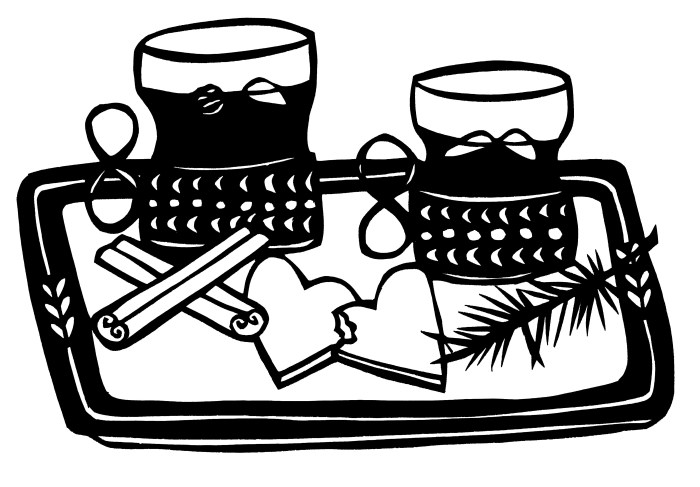
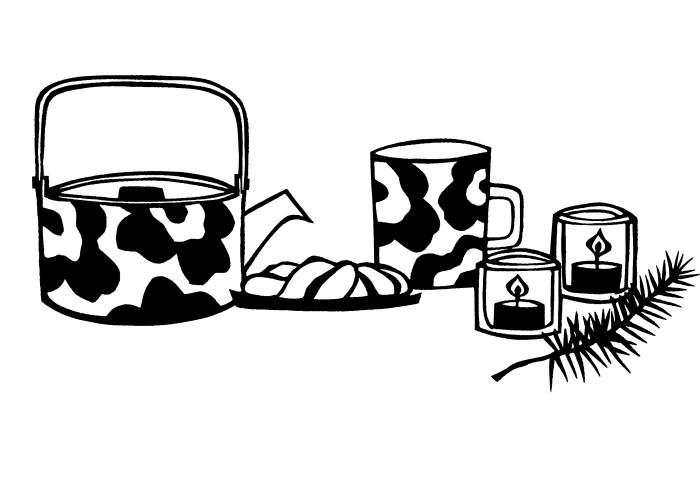
A couple of Scandinavian classics featured in the papercut above: the Kivi candleholders from Iittala and a teapot and mug in the Unikko design from Marimekko. Kivi means “stone” in Finnish, and the candleholder is a gentle nod to the fact that so much of Scandinavian design is influenced by nature. The Marimekko Unniko design dates back all the way to 1964, when the company’s founder Armi Ratia declared that the company would never print a flower pattern again. Designer Maija Isola thought otherwise, and came up with this iconic poppy print that is still used today, over half a century later.
Recipe: Chanterelle Tart with Rye Crust
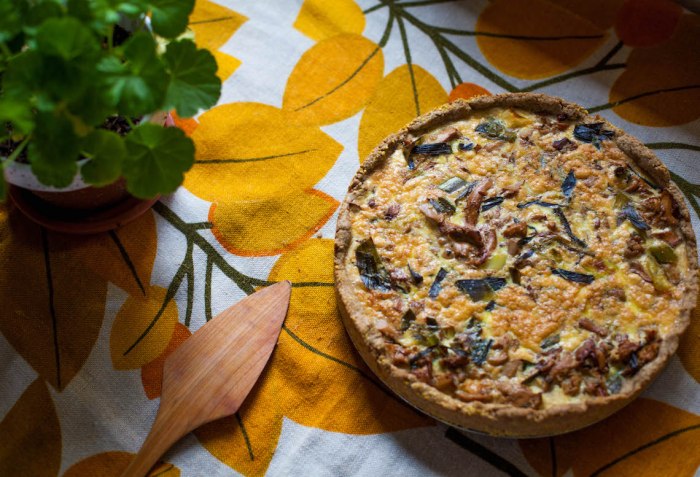
In Swedish, chanterelles (and other mushrooms that can be found in the forest this time of year) are often referred to as skogsguld, forest gold. Cooking them up in a pan with a little olive oil or butter is as indicative of autumn to me as the changing colors.
I haven’t been out to harvest any chanterelles this season, but fortunately my friend Adam supplies a good stash, and I like sautéing them and serving on top of a slice of rye bread for a simple warm sandwich.
Another good way to put chanterelles to use is in a tart or quiche. I like making savory tarts because they are fairly straightforward and forgiving; just sauté up whatever you want as a filling, pour some whisked eggs on top and call it a day.
For this one in particular, I wanted a flavorful crust to pair with the earthy chanterelles, so I came up with a rye pastry crust. It’s made up of mostly rye flour and a little oat flour.
This is a cozy recipe, perfect for a blustery autumn day with flickering candles on the kitchen table. Leftovers will be perfect for breakfast the next day too, so be sure to save a few slices.
Kanelbullensdag – Swedish Cinnamon Bun Day

In Sweden, the cinnamon bun gets its very own day: October 4th. Celebrate with a fika today!
I like making cinnamon buns (and more importantly, cardamom buns) with sourdough. Here’s a recipe for sourdough cardamom buns with pear and hazelnut filling to try out.
Or you can try the traditional recipe in my book Fika: The Art of the Swedish Coffee Break. Check out #kanelbullensdag on Instagram for inspiration.
New Book: “Live Lagom: Balanced Living the Swedish Way”
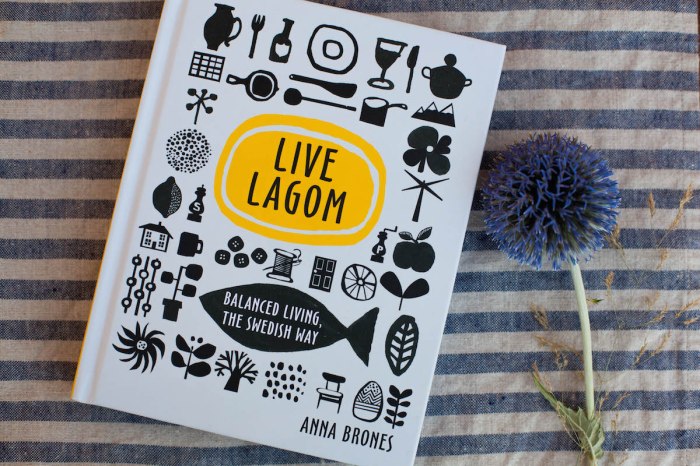
Today marks the release of my new book Live Lagom: Balanced Living the Swedish Way. I love book birthdays because they are the ideal time to give a little backstory on the book and what it meant for me to write it.
Lagom is a Swedish word that doesn’t have a direct translation in English, but means something along the lines of “just right.” As the title of the book would have you believe, it’s a look at how the concept of lagom translates into various elements of Swedish society, and identifies some of the lessons that we might be able to incorporate into our own lives.
But you don’t need me to tell you what’s in the book; you can buy it to get that story! You’re here for the inner look.
A Strawberry Cake to Celebrate Swedish Midsummer
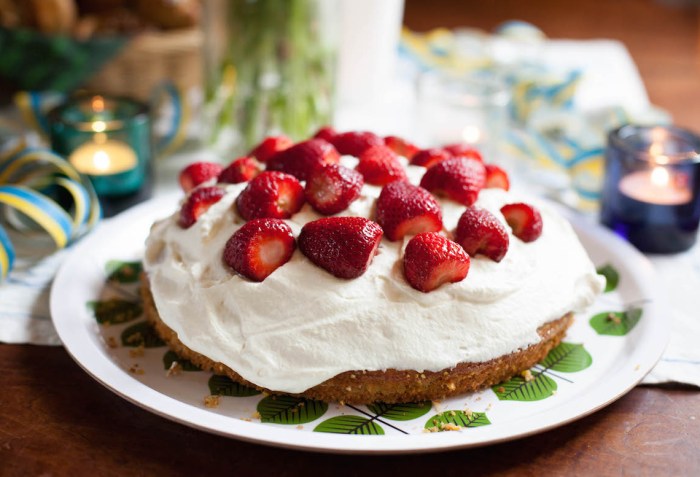
Summer solstice marks the longest day of the year, and that’s cause for celebration. This week is one of sunshine stretching into the evening, carpets of wildflowers in the midst of grassy fields, bare feet and picnic blankets.
For me, it marks the celebration of Swedish midsommar, which will be celebrated this Friday. The traditional midsommar spread of food is one of my favorites, featuring some of my favorite dishes like marinated cucumbers, pickled herring (which you can even use in a savory cake), and plenty of knäckebröd.
But my favorite part of midsommar has to be dessert. Strawberry cake is one of the most common desserts on the Swedish midsommar table, and it puts seasonal berries front and center. It’s a simple dessert, topped with plenty of whipped cream and bright red berries.
I like to make the cake with cardamom, and even marinate a few strawberries in honey and cardamom to use as the center filling. The cake is cut in half, so that you can layer it, but if you want to make an even fancier cake, consider making two of them and layering them.
How to Twist Swedish Cinnamon Buns (Kanelbullar)
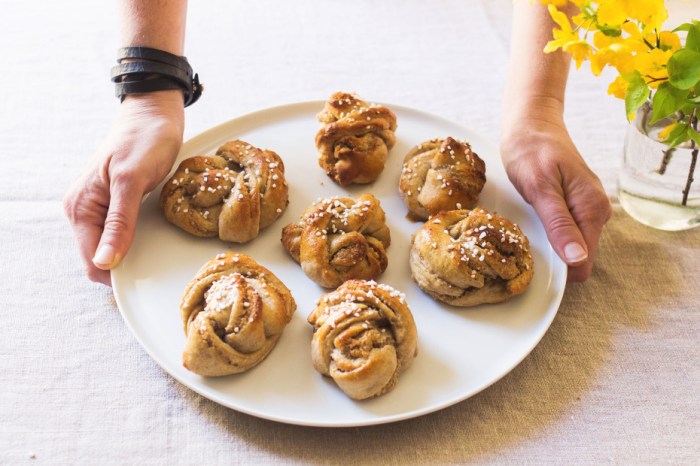
When my friend Marissa asked if I might like to have a recipe from Fika: The Art of the Swedish Coffee Break featured on FvF, I immediately said yes. I like Marissa’s photography and since I rarely spend any time styling or photographing my own recipes I thought it would be fun to have someone come and do it for me. See, I am lazy in the kitchen!
Get a photographer in your (tiny) kitchen and you immediately realize how hard food photography and styling really is; I have a lot of respect for the people who make it look easy. But let’s be honest; there is nothing like someone doing the hard work for you. And it’s even better when you want to do a series of how-to photos. Instead of playing the awkward Tripod in the Kitchen with Self Timer Camera game, all you have to do is go through the steps and have the photographer shoot it for you. This is perfect for Swedish cinnamon and cardamom buns, which people often ask me how they should twist. Now I finally have a visual guide to share.
 blog.annabrones.com