Archive for the ‘Food + Recipes’ Category
Welcoming the Darkness
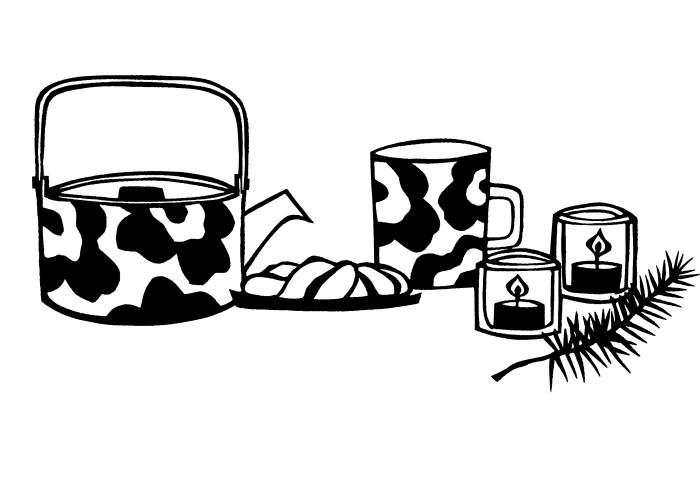
It’s so easy to complain about the lack of light this time of year, particularly after we have set our clocks back and the afternoon succumbs to darkness even earlier. Yet with that darkness comes a beautiful quietness and stillness that’s hard to find at other times of year.
The Scandinavian way to enjoy this is to bring in lots of candlelight. I’ve been lighting candles both in the morning and the afternoon, a way to welcome the darkness instead of falling prey to it. In Finnish, “kaamos” is the world that refers to the time of year when the sun doesn’t even rise, yet there is still a magical lightness that covers the winter landscape. It doesn’t matter if you live in a place of pure winter darkness or not, candles and a pot of tea or a cup of coffee always help.
So in the coming weeks, invite a friend over and have fika by candlelight. (Here’s a recipe for sourdough cardamom buns, if you are in the mood for a little baking)
//
A couple of Scandinavian classics featured in the papercut above: the Kivi candleholders from Iittala and a teapot and mug in the Unikko design from Marimekko. Kivi means “stone” in Finnish, and the candleholder is a gentle nod to the fact that so much of Scandinavian design is influenced by nature. The Marimekko Unniko design dates back all the way to 1964, when the company’s founder Armi Ratia declared that the company would never print a flower pattern again. Designer Maija Isola thought otherwise, and came up with this iconic poppy print that is still used today, over half a century later.
Recipe: Chanterelle Tart with Rye Crust
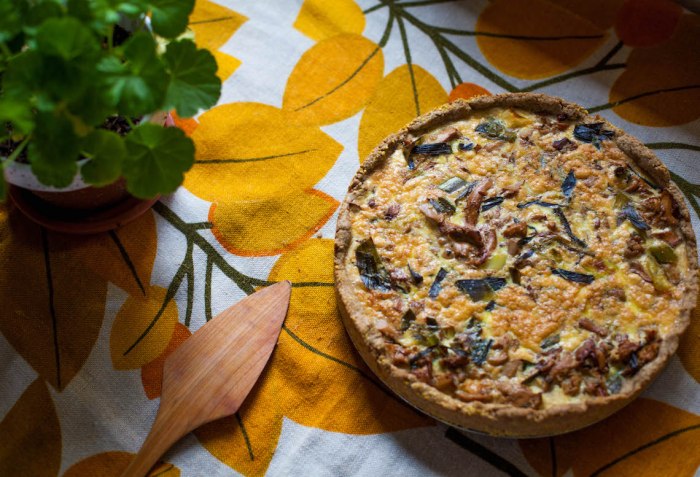
In Swedish, chanterelles (and other mushrooms that can be found in the forest this time of year) are often referred to as skogsguld, forest gold. Cooking them up in a pan with a little olive oil or butter is as indicative of autumn to me as the changing colors.
I haven’t been out to harvest any chanterelles this season, but fortunately my friend Adam supplies a good stash, and I like sautéing them and serving on top of a slice of rye bread for a simple warm sandwich.
Another good way to put chanterelles to use is in a tart or quiche. I like making savory tarts because they are fairly straightforward and forgiving; just sauté up whatever you want as a filling, pour some whisked eggs on top and call it a day.
For this one in particular, I wanted a flavorful crust to pair with the earthy chanterelles, so I came up with a rye pastry crust. It’s made up of mostly rye flour and a little oat flour.
This is a cozy recipe, perfect for a blustery autumn day with flickering candles on the kitchen table. Leftovers will be perfect for breakfast the next day too, so be sure to save a few slices.
Comestible on Shortlist for Stack Awards 2017 ‘Best Use of Illustration’
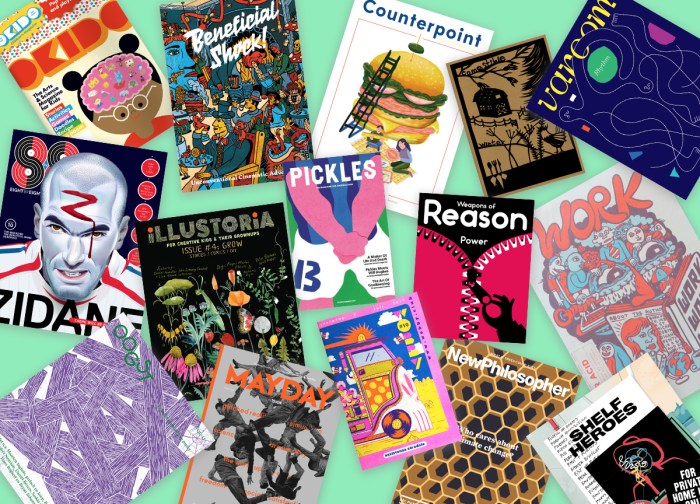
Ever since I read about a writer’s goal for 100 rejections a year, I have been trying harder to do more submissions, whether they are for writing, for residencies, for awards, etc. The idea of course is that if you aim for 100 rejections in a year, somewhere along the way, you’re going to get a response that says “yes” instead of “no.”
I decided to submit my indie food zine Comestible to the Stack Awards 2017, a selection of awards for independent magazines. These days, the indie mag scene is strong, and every time I go into the bookstore I am amazed (perhaps slightly overwhelmed as well) at the high caliber of content and editorial vision that is out there.
I submitted Comestible to the Best Use of Illustration category, since I think that’s a large part of what makes the publication different. The food media space is inundated with gorgeous food photography, and when I started Comestible I wanted something different. Every issue has featured my own papercut illustrations as well as drawn illustrations by some of my favorite illustrators, Jessie Kanelos Weiner for the issues in 2016 and Molly Reeder for the issues in 2017.
How shocked was I when I learned that Comestible had made it onto the shortlist of magazines for the award? Quite shocked! I am honored to have it be a part of a group of such incredible publications with creative and unique artwork. Check out the full list here.
Yet another reminder that it’s always worth it to put your work out there.
Image: Stack Magazines
Fall/Winter Reading: Comestible Issue 6

If you’re looking for something to curl up with as the days get colder and darker, consider checking out the latest issue of Comestible.
Comestible is my bi-annual food zine, dedicated to showcasing where food comes from, and using food as a lens for looking at other issues like economics, gender, etc. It’s filled with art, essays and recipes.
In Issue 6, we cover everything from the effects of the immigration crackdown on farmworkers to kimjang, the Korean tradition of making kimchi.
For a little taste, here is a short excerpt from a piece called “Stick by Stick” by Kirsten K. Shockey of Ferment Works, all about the enormous job of preserving heirloom apples.
“What kind of apples do you recommend for hard cider?” Christopher ventured. Christopher and I live, work, and raised our family on a small holding in the mountains of southern Oregon. When we bought our hilly homestead, our goal was to be self-sufficient and leave the land better than we found it. This has led us to many remarkable farmers who have generously shared wisdom not found in books. That day, we sat there gazing at Nick like initiates around a sage, waiting for the meaning of life. Or at least the meaning of apples.
Nick, in his late seventies, was hard of hearing and seemed content to be enjoying his coffee.
Christopher looked at me. “What kind of apples would you suggest for hard cider?” he said again, this time much louder.
Our land, cut from mountains blanketed in fir and pine forests, is suited to trees, not row crops. We were planting a cider orchard to join the ninety-year-old pioneer-planted apples. We wanted to honor the older apples by finding unique heirloom varieties.
“There are a lot of great apples for cider,” Nick said and we both stared, pen in hand, waiting to scribble down varieties we’d never heard of. He told us a good cider apple contributes to one or more of four components: color, flavor, body, or bouquet. He didn’t drop any variety names though.
“Do you have the Redstreak?” Christopher asked hopefully. During the eighteenth century, this apple was believed to be the finest cider apple in England. At the time, cider made from the Redstreak commanded the highest prices. Its popularity had diminished by the end of the century and its believed viruses may have killed remaining trees. Now the apple is rare, even thought to be extinct, as breeders are unsure if the claimed Redstreaks are authentic Redstreaks.
“Yes, I believe I do,” Nick said. “Would you like to see the orchard?”
Order a copy of the issue here.
Kanelbullensdag – Swedish Cinnamon Bun Day

In Sweden, the cinnamon bun gets its very own day: October 4th. Celebrate with a fika today!
I like making cinnamon buns (and more importantly, cardamom buns) with sourdough. Here’s a recipe for sourdough cardamom buns with pear and hazelnut filling to try out.
Or you can try the traditional recipe in my book Fika: The Art of the Swedish Coffee Break. Check out #kanelbullensdag on Instagram for inspiration.
A Strawberry Cake to Celebrate Swedish Midsummer
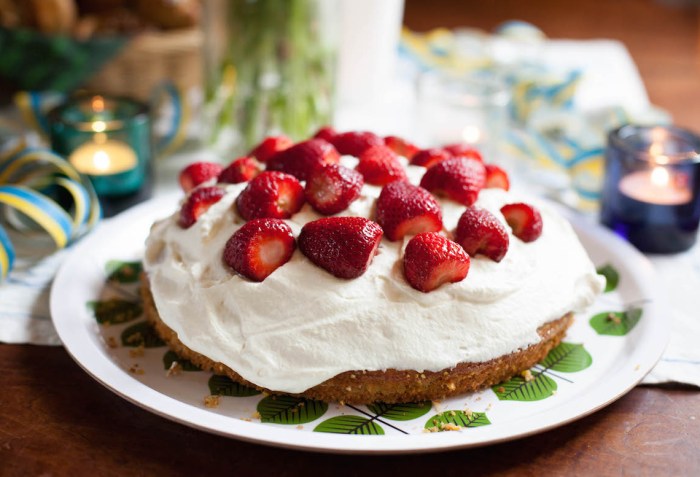
Summer solstice marks the longest day of the year, and that’s cause for celebration. This week is one of sunshine stretching into the evening, carpets of wildflowers in the midst of grassy fields, bare feet and picnic blankets.
For me, it marks the celebration of Swedish midsommar, which will be celebrated this Friday. The traditional midsommar spread of food is one of my favorites, featuring some of my favorite dishes like marinated cucumbers, pickled herring (which you can even use in a savory cake), and plenty of knäckebröd.
But my favorite part of midsommar has to be dessert. Strawberry cake is one of the most common desserts on the Swedish midsommar table, and it puts seasonal berries front and center. It’s a simple dessert, topped with plenty of whipped cream and bright red berries.
I like to make the cake with cardamom, and even marinate a few strawberries in honey and cardamom to use as the center filling. The cake is cut in half, so that you can layer it, but if you want to make an even fancier cake, consider making two of them and layering them.
‘I Look Like a Fisherman’ Greeting Cards
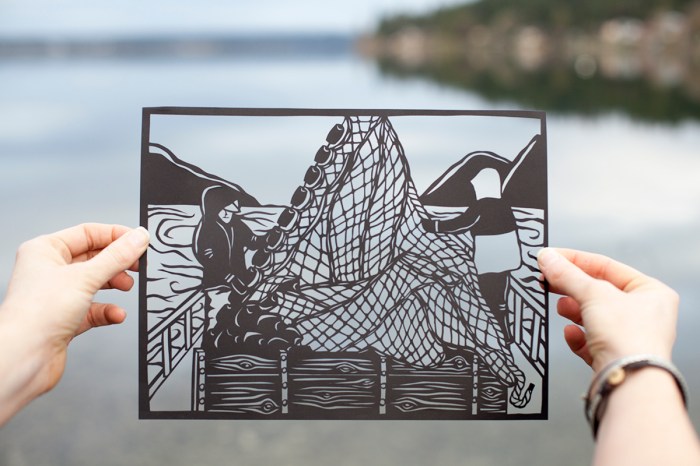
In honor and support of the women who fish our seas, I teamed up with Salmon Sisters to make a limited edition of benefit greeting cards. They were inspired by the I Look Like a Farmer cards I did last fall.
The result is five different cards featuring papercuts of mine. The series is titled ‘I Look Like a Fisherman’ and 50% of proceeds will be donated to sponsoring a promising young female fishermen to attend the 2017 Alaska Young Fishermen’s Summit in Anchorage, Alaska.
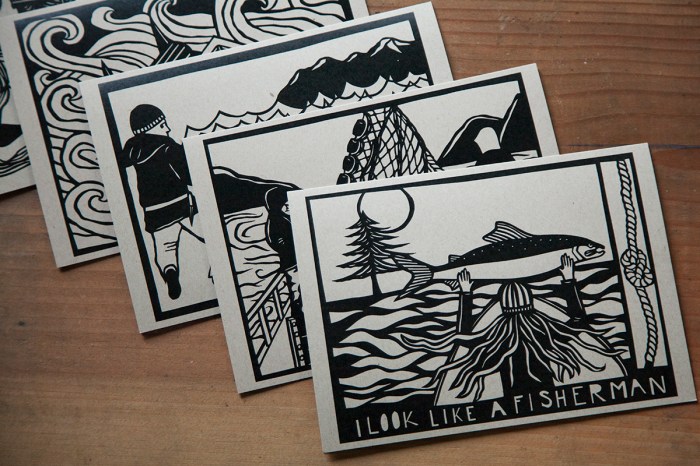
The Summit takes place December 6-8, 2017, and is an incredible resource for fishermen getting started in the industry. Each set of five cards comes with five envelopes. The 5×7″ greeting cards are printed on 100 lb. cover Desert Storm Neenah Environment paper, FSC certified and 30% post consumer. The cards are printed in Seattle, Washington by women-owned printing company Girlie Press.
I love working on projects like these that highlight (and also support) the hard work of our food producers. You can buy a set of cards on the Salmon Sisters website or on my site.
Empowering Women Coffee Farmers
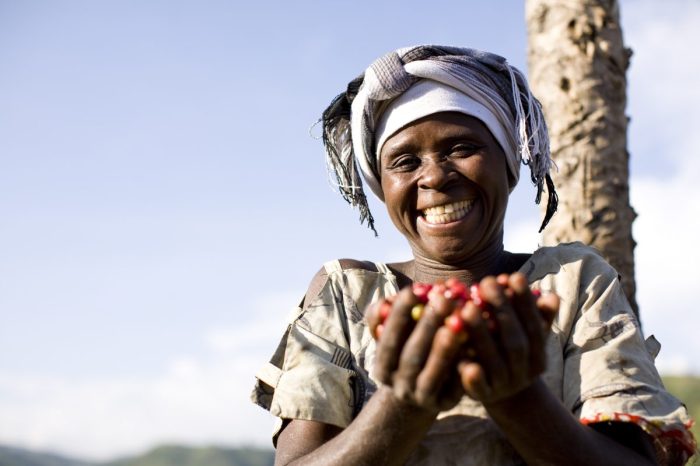
“To rebuild the spirit of a woman is to rebuild the spirit of a country.” That’s part of the mission statement of Rebuild Women’s Hope, an organization based in Bukavu, on the edge of Lake Kivu in the Eastern region of the Democratic Republic of Congo. It was started by a local Congolese woman and the organization works to empower local women coffee farmers. It’s one of many initiatives around the world focused on empowering women coffee farmers.
I wrote an article all about the topic that was published this week on Sprudge. Here’s a short snippet:
As part of that agricultural web, coffee is an industry dependent on the work of women around the globe, making gender equity an essential part of the sustainable coffee supply chain. “Most of the obstacles faced by women coffee farmers are the same as those found across the agriculture sector,” says Nick Watson, a coffee-sector adviser with the International Trade Centre, who has an initiative focused on women in coffee. “Social norms often discriminate against women in rural areas leading to disproportionate land and asset ownership; household and income decision making; time and labour distribution; access to information and training; and participation and leadership in rural organisations or as registered suppliers to agribusinesses.”
Despite these obstacles, it’s often thanks to women that the coffee production happens in the first place. “Women are on the front lines when it comes to our beloved cup of coffee. They serve as the primary labor force on roles that most affect quality, from picking the ripe coffee cherries off the tree to sorting beans throughout processing. Despite their significant role, most earnings go to men who own the property and manage commercial deals,” says Phyllis Johnson, president of BD Imports.
You can read the full article here.
Image: Glenna Gordon courtesy ITC
“Protest Fuel: The Revolution Must Be Fed” – Benefit Zine

In January 2017 (just in time for the Million Women’s March) my friend Caitlin and I will be releasing Protest Fuel: The Revolution Must Be Fed. We are currently wrapping up the final design so that we can send it to the printer right after the new year.
No matter who we are or here we live, we must eat. Food is something that unites us. With that in mind, I wanted to use food as a catalyst for change. Protest Fuel is a collection of recipes, essays, artwork and quotes, all with the goal of inspiring you to take action, whether that’s by hosting a comforting soup night or getting out on the frontlines in a protest.
The zine itself is will be printed in January 2017 in Seattle by Girlie Press. All of the contributors to this zine have volunteered their recipes, stories and time, and for that I am very grateful.
I wanted this zine to benefit a cause, but how to choose? There is no way to choose. There are so many issues that are important right now. I have chosen to donate 100% of the proceeds to the Women’s Environment and Development Organization. When women thrive, so does society. Without the environment we have nothing. As one of the WEDO founders Vandana Shiva once said, “In nature’s economy the currency is not money, it is life.” I hope that this zine inspires you to choose life, to be active within your own communities, and to support the people and initiatives committed to positive change.
You can preorder Protest Fuel: The Revolution Must Be Fed here.
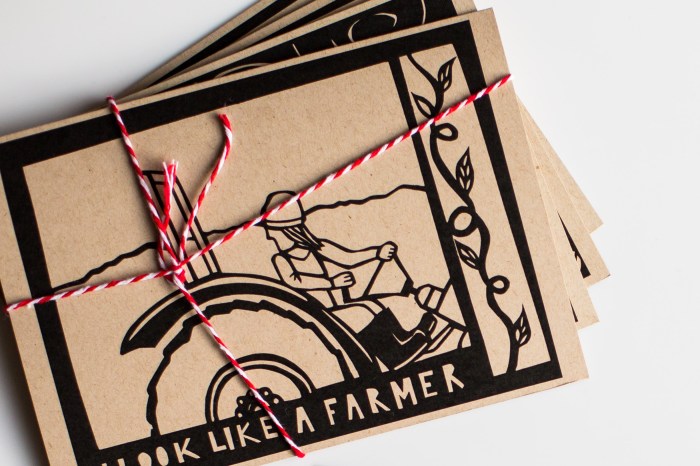
“I Look Like a Farmer” Greeting Cards to Support Women in Agriculture
I have spent a lot of this year asking myself how I can contribute to my community and beyond. As you may know, that has come in the form of publishing Comestible. Creating a platform for telling stories about food and food production has felt like the right thing for me to be doing, a way to contribute to the world in a creative and educational way.
But I wanted that platform to be able to do more. So I called up my friend Audra Mulkern of The Female Farmer Project. I love Audra’s work, and she is an amazing advocate for women farmers and sustainable agriculture.
I had made Audra a papercut inspired by one of her photographs earlier in the year, intending to eventually use it in Comestible. But in instead, it spawned an idea. “What if we did a series of cards and used them to raise money to support female farmers?”
So here we are.
I made three more papercuts inspired by Audra’s original photographs, and we turned them into a series of greeting cards called I Look Like a Farmer. The cards are 5×7″ (so perfect for framing even if you don’t want to send them!) and printed locally in Seattle, WA at woman-owned printing company Girlie Press.
 blog.annabrones.com